

The Cheapest Boat Is Often the Most Expensive
The cheapest cruising boat can become the most expensive. Learn how ownership costs, repairs, and upgrades affect your budget, and why buying a well-equipped sailboat can save you money and get you sailing sooner.

Three rules for buying a cruising boat without letting your dreams drain your bank account.
Buying a boat is a big deal, but most people botch it. The very thing you set out to avoid, you're likely to become a victim of yourself if you don't lay down some rules. Buying a boat should be treated like trading stocks: with zero emotional influence. It's OK to dream and yearn while you're figuring out what kind of boat will best suit your needs, but when it comes to choosing the boat you're actually going to buy, keep in mind these three rules.
Rule #1: The Cheapest Boat Can Cost You the Most
The price is low because the boat is on its last leg. Yeah, it's got a nice interior. That's the bait. You imagine yourself on that beautiful settee, enjoying a glass of wine while you cross oceans with ease. Nothing could be further from the truth.
You won't realize it until it's too late. At first, you'll try to spend your way out of it. “I can fix this! I'll just pay some magical boat mechanic to make everything work properly!” Wrong! Not when a boat is this far gone. To do it right, you'll need to drain your kids' college fund, and selling this burden to the next unsuspecting bloke will be your only option if you want to save your marriage. With boats, you literally get what you pay for, so don't buy the cheapest boat.
Rule #2: Buying the Boat is the Cheap Part
Can you actually afford to own a boat? Not to buy a boat, but to own it? In my experience, plan to pay around 20% of the purchase price per year, just for the honor of posting boat selfies on Instagram. Depending on how you use your boat, that includes insurance, depreciation, dockage, maintenance, repairs, and the occasional unexpected surprise - and they all add up faster than most new owners anticipate.
This is where most people fail to be honest with themselves. Everything in the marine world is top dollar: parts, service, storage, labor, insurance. These costs are non-negotiable, because you didn't buy a floating hunk of junk. You bought an extremely valuable asset that must retain its value under your ownership. Sun, salt, and time are constantly trying to destroy your investment. A few months of neglect in the Florida sun can cause irreparable damage to your gel coat.
Budget these ownership costs before you buy the boat. It's better to estimate higher than you think, especially if you've ever smash-bought stocks in the middle of the night after reading a tweet from the CEO and convincing yourself you had insider information.
Rule #3: Buy the Upgrades, Not the Project
Even if you somehow forgot rules 1 and 2, rule 3 will save you. It's also the hardest to follow, because buyers are so distracted by the boat itself.
Buy a boat for its gear, not for the boat. I'm not saying don't buy a Bali if you want a Bali. I'm saying don't buy the boat you think you want. This will save you a lot of money.
Do the math, calculate the time and expense. You'll save immensely on both if the boat already has what you want. You're buying all those upgrades at a depreciated cost, and the work is already done for you. It's the seller's loss and your gain.
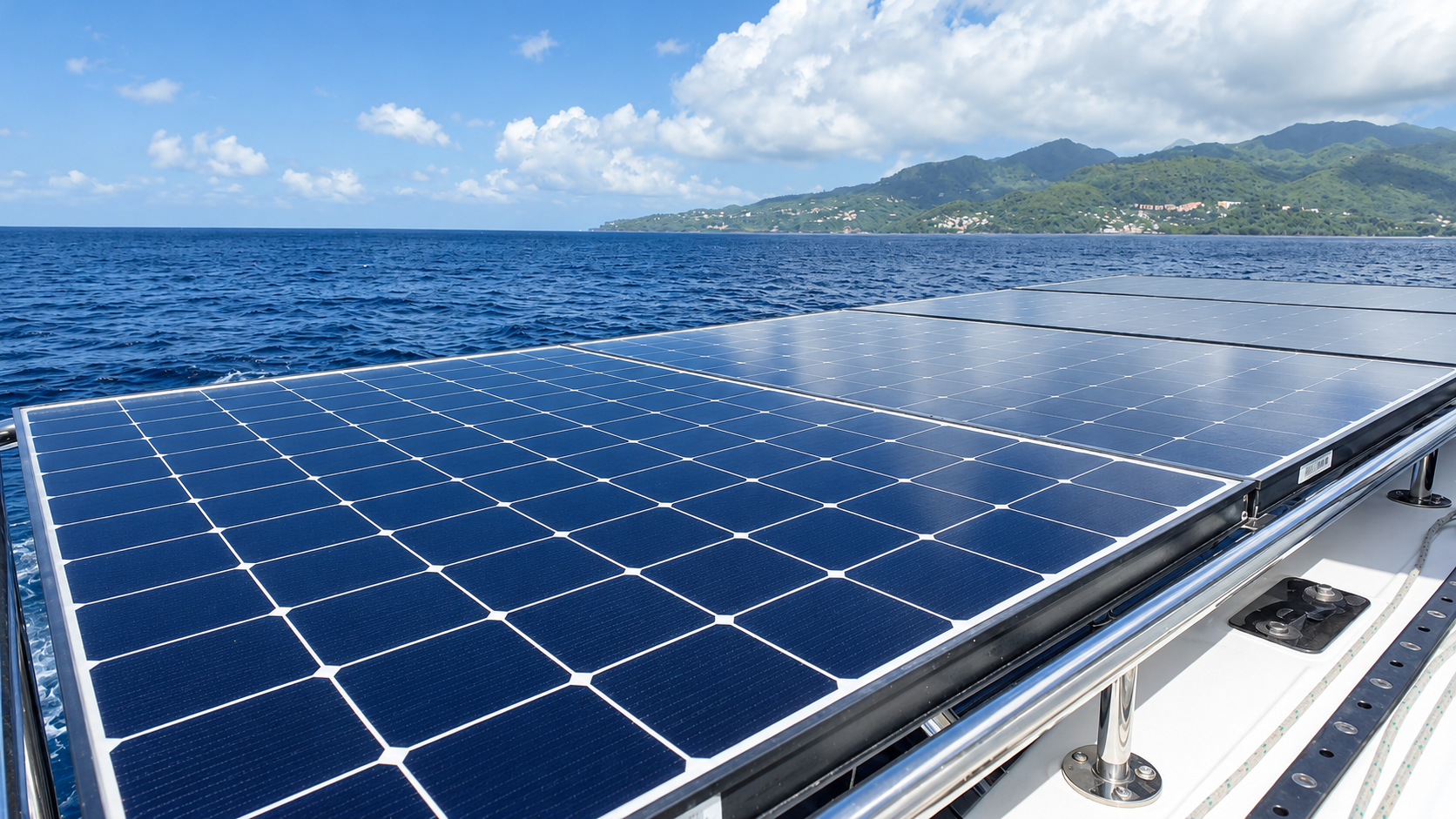
Why does this matter? Because a boat doesn't take you sailing, the gear does. I could set sail in a bathtub and beat you to the Bahamas before you finish this article, but I'd pull up to the first hotel I could find, because the gear on a bathtub sucks.
What do I mean by gear? Basically everything that's not fiberglass (or whatever your hulls are made of), and more specifically, the gear that isn't stock. If you want to leave the marina for more than a few days, I suggest you buy a boat with these items:
Expand each category to see what to look for…
Power & Independence
- 800-2000W solar array
- A lithium battery bank to fit your cruising needs (usually 600-1800Ah will do the trick)
- Watermaker
- Air conditioning with 90/10 or 70/30 cupronickel condenser tubes that run R-410A or R-407C refrigerant
Sailing & Safety
- Sails less than 7 years old
- Standing rigging less than 10 years old
- Modern anchor with 200 feet of chain
- Thru-hulls serviced and rebedded less than 10 years ago
Equipment & Reliability
- Dinghy davits
- Navigation electronics less than 7 years old
- Engines with reasonable hours and documented maintenance
The bottom line is to buy a boat with all the gear you want already installed and plenty of life left. You don't want the task of building a solar arch or rebuilding a motor.
The True Cost of a Cruising-Ready Boat
The asking price doesn't always tell the whole story.
| Cost Comparison | Boat A | Boat B |
|---|---|---|
| Asking Price | $775,000 | $850,000 |
| Solar & Lithium | $35,000 | Included |
| Watermaker | $15,000 | Included |
| Sails & Rigging | $35,000 | Not Needed |
| Cruising Equipment | $20,000 | Included |
| TOTAL INVESTMENT | $880,000 | $850,000 |
Illustrative estimates only. Actual equipment and installation costs vary by vessel and cruising requirements.
The bottom line: The $775,000 boat looks like a bargain until you spend another $105,000 getting it ready to cruise. Suddenly, the $850,000 boat is actually $30,000 less expensive, and you can spend your time sailing instead of managing upgrades.
When you're looking at listings, don't get sucked in by the pretty pictures. Study the gear. Is it new or old? You want new gear. Does it have everything you want, or will you have to replace the entire power management system? Don't underestimate how much you'll rely on these things. You don't want to be running your generator all the time to charge your batteries. You can't be pulling into a marina every two days to fill the water tanks. A cruising boat is supposed to be a self-reliant machine you can count on. Buy it from someone who already did all the hard work, sailed it for a year, kept up on maintenance, and put it up for sale.
The Big Picture
Here's the catch: these boats are not cheap, but they're a lot more affordable than the boat with no gear or old gear. It's about understanding total cost of ownership, not the sticker price. Remember, the cheap boats are the most expensive, and the expensive boats are the cheapest.
Following these rules will help you buy the best boat for the best price. After reading this, you may want to adjust the class of boat you're targeting. Instead of buying a 50ft catamaran you found for a steal, considering going with a well-outfitted, ready-to-go 40ft - 45ft catamaran.
Aim for quality. You want to have the nicest boat in the marina, not because you want people to notice you in your Speedo, but because it's the responsible financial decision.
- You want a boat that's not going to be a bunch of problems.
- You want a boat you can actually afford.
- You want a boat that already has the gear you need to go cruising.
The best boat isn't necessarily the biggest, newest, or cheapest one you can find. It's the boat that lets you spend more time doing what you bought it for in the first place: sailing.
And if someone else already paid to make that possible, even better!